
Taking on the Challenge of Sustainable Shipping
The rising wave of decarbonisation and the maritime industry’s responsibility
The global community is currently facing the major challenge of global warming. Reducing greenhouse gas (GHG) emissions, considered the primary cause of global warming, is a social responsibility shared by all industries.
Shipping is regarded as a low-emission mode of transport because it can transport large quantities of cargo in a single journey and produces fewer CO₂ emissions than alternatives. However, total emissions from international shipping are also rising with the increase in global trade volumes.
At the TSUNEISHI Group, which encompasses a Shipbuilding Business that builds ships and a Shipping Business that operates ships, we are utilising this unique structure to ensure close collaboration between both businesses. Guided by our social responsibility to pass on a sustainable global environment to future generations, we have established a framework that enables early reductions in environmental impact, including decarbonisation, while ensuring economic efficiency in real-world operations. As such, we are continuing to address these environmental challenges.
At the Forefront of Next-Generation Fuelled Ships: Building Eco-Friendly Ships
Under the EEDI (Energy Efficiency Design Index), an index of CO₂ emissions performance, TSUNEISHI SHIPBUILDING met the EEDI Phase 3 requirements ahead of the 2025 deadline, achieving reduced environmental impact and improved fuel efficiency.
Drawing on our wealth of knowledge and expertise accumulated over our long history in shipbuilding, the TSUNEISHI Group is committed to achieving carbon neutrality. To this end, we will continue to improve our existing technologies, while building and operating next-generation fuelled vessels through the united efforts of our shipbuilding and shipping businesses.
We have built LPG carriers equipped with equipped with fully in-house-designed and manufactured tanks, as well as limestone carriers powered entirely by LNG (liquefied natural gas). Our LNG-powered vessels feature a hybrid propulsion system, which reduces CO₂ emissions by approximately 24% compared to conventional heavy oil-fuelled vessels, and enables zero-emission operation during entering and leaving port.
In March 2025, TSUNEISHI launched Japan’s first hydrogen dual-fuelled tugboat and delivered it in October of the same year. The vessel features a high-output hydrogen dual-fuelled internal combustion engine (ICE), which reduces CO₂ emissions by approximately 60% compared to conventional fossil-fuel vessels. Additionally, GX Steel “JGreeX *¹” was used for all hull plates, contributing to reducing GHG emissions arising from steel production.
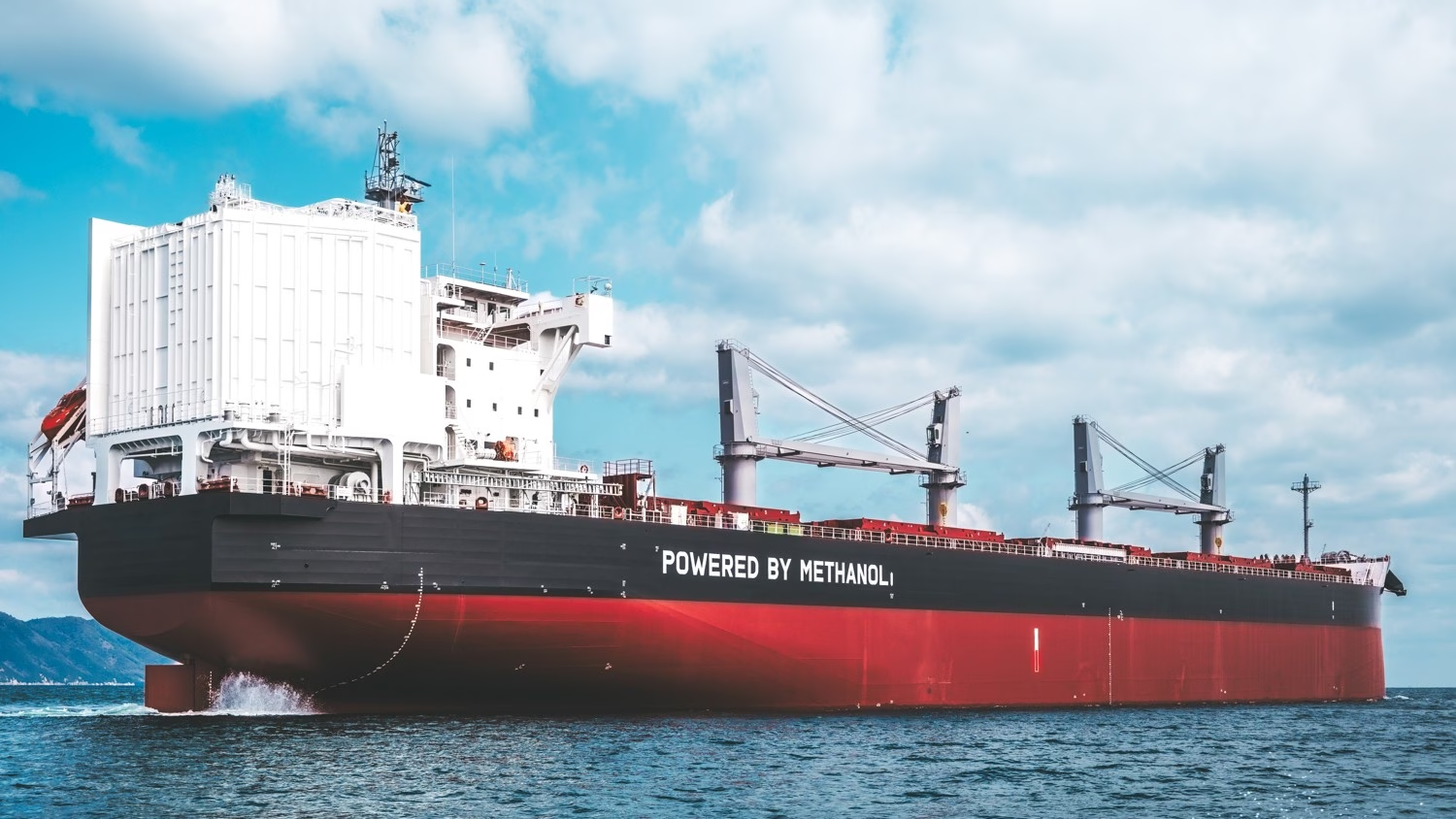
In May 2025, TSUNEISHI SHIPBUILDING delivered the world’s first methanol dual-fuelled bulk carrier in the 65,700 deadweight ton class, the TESS66 AEROLINE. By using methanol, the vessel achieves reductions of up to 80% in nitrogen oxides (NOx), up to 99% in sulphur oxides (SOx), and up to 10% in carbon dioxide (CO₂) emissions, thereby contributing to carbon neutrality.
*¹ JGreeX: A steel product that enables a significant reduction in GHG emissions in the steelmaking process by allocating emissions reductions created by JFE Steel’s GHG- reduction technology to any steel material.
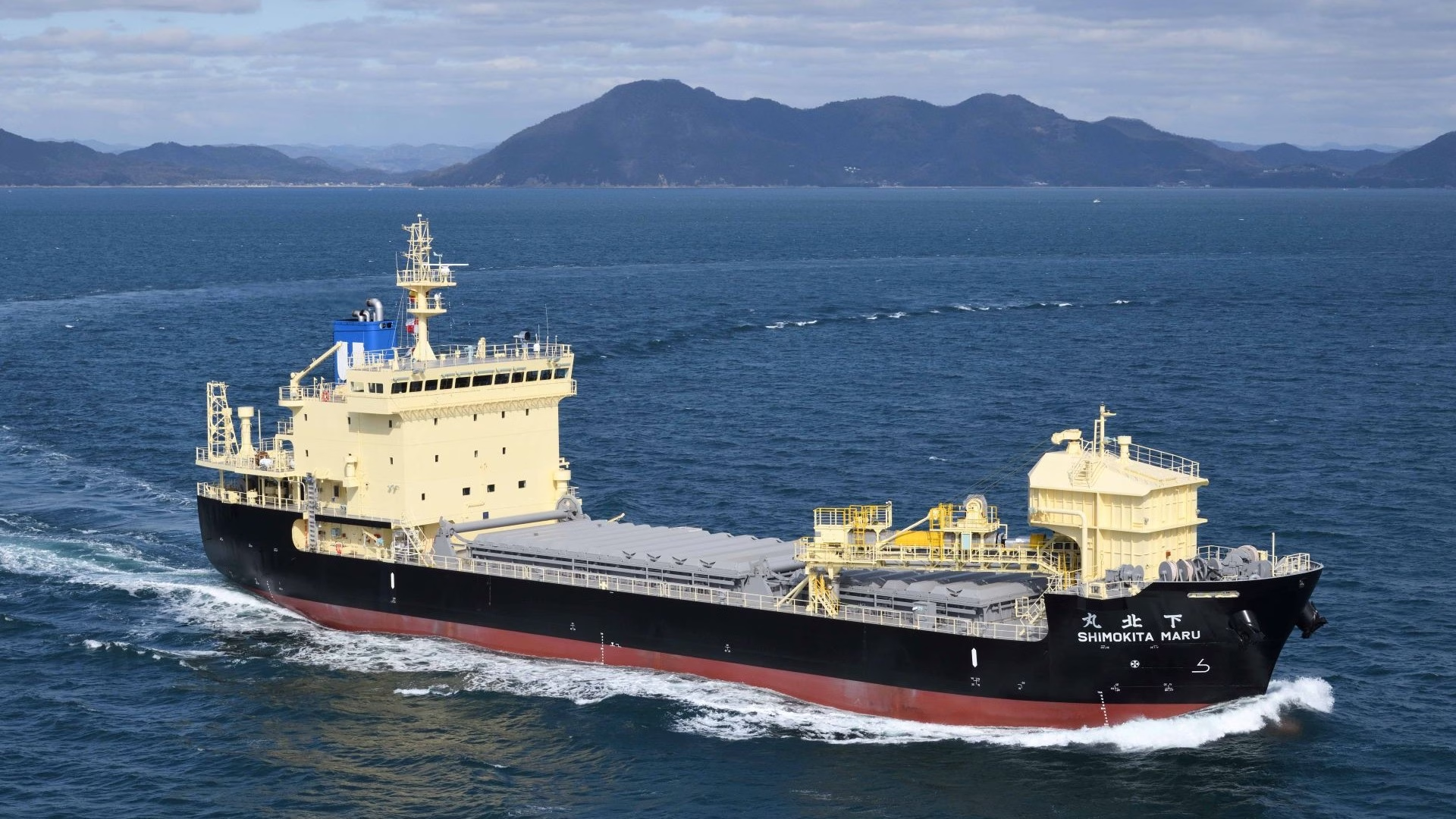
The Shimokita Maru – LNG-powered limestone carrier
The Shimokita Maru is an LNG-powered limestone carrier capable of zero-emission operation during entering and leaving port. It features a hybrid propulsion system using LNG fuel and lithium-ion batteries.
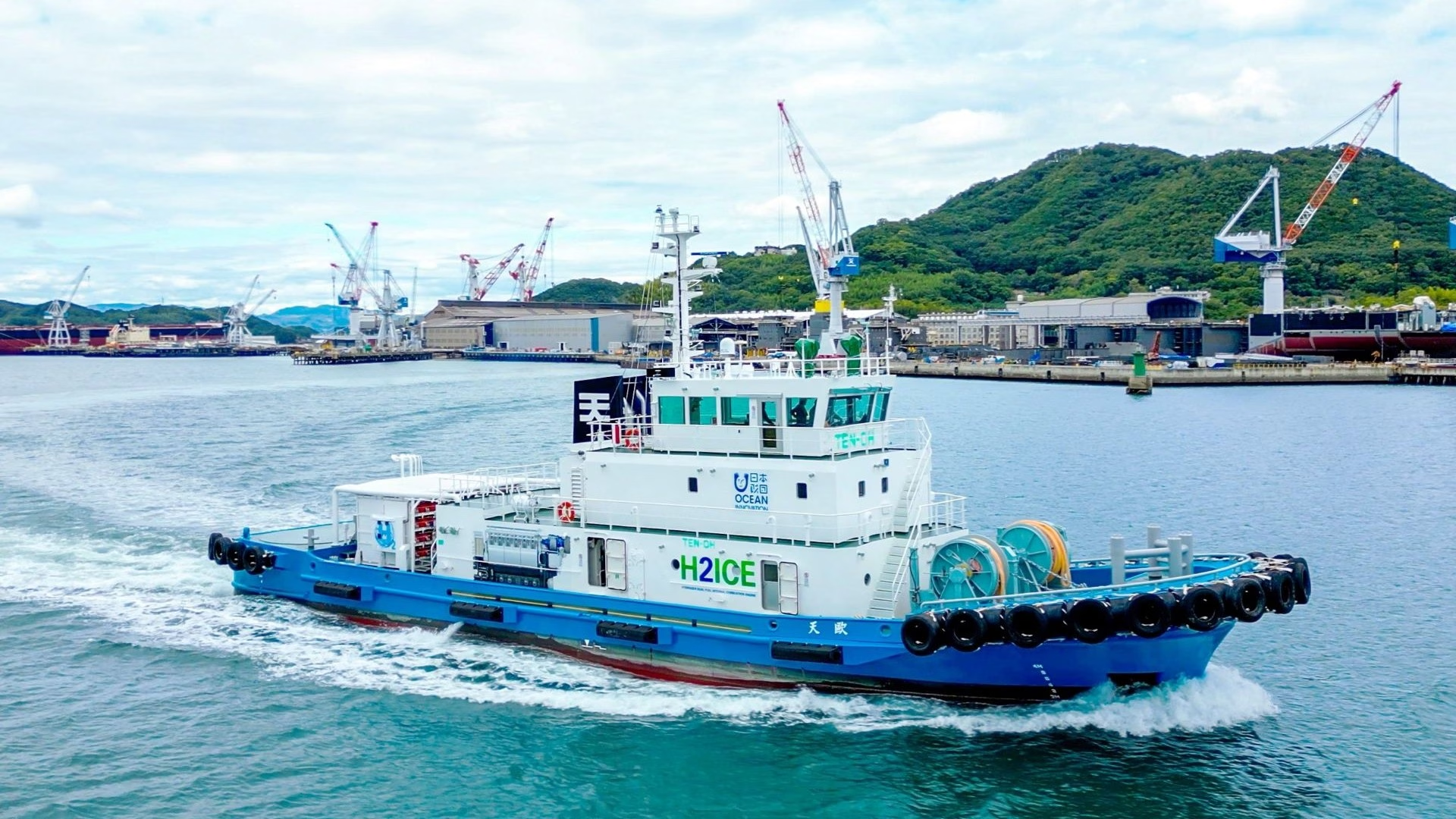
Japan’s first hydrogen-fuelled tugboat
It features a high-output hydrogen dual-fuelled ICE and a high-pressure hydrogen gas storage and supply system with large capacity.
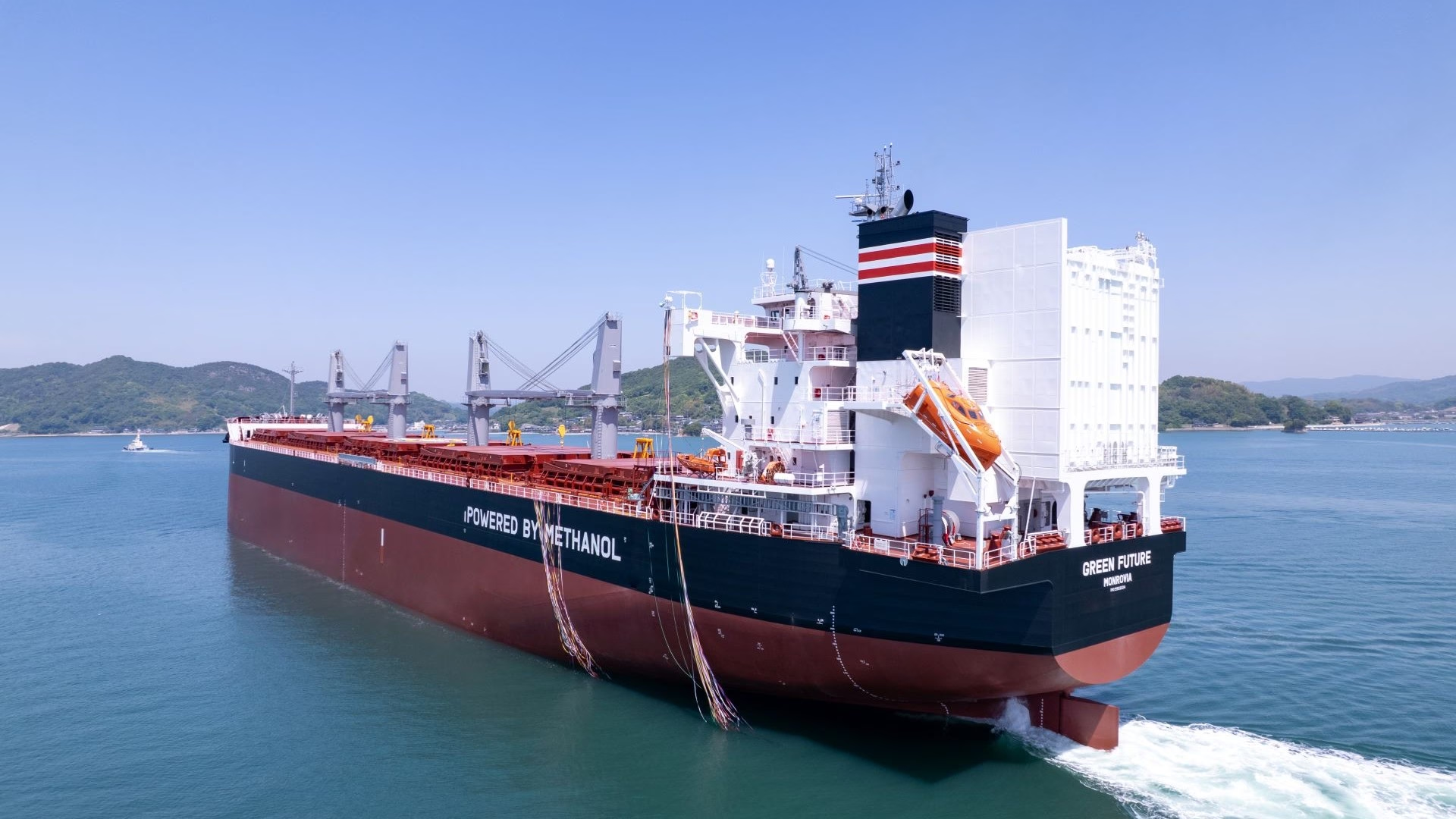
The World’s first methanol dual-fuelled bulk carrier
As the world’s first methanol dual-fuelled ultramax bulk carrier, featuring TSUNEISHI SHIPBUILDING’s latest vessel designs, it boasts one of the largest deadweight capacities in the Ultramax bulk carrier category.
Realizing eco-friendly transport systems through Group synergy
What sets the TSUNEISHI Group apart and serves as the key to accelerating our efforts to address environmental challenges is the strong collaboration between our shipbuilding and shipping businesses.
The cutting-edge, eco-friendly vessels built in the shipbuilding business are proactively deployed and operated by the Group’s shipping business, enabling the rapid practical implementation and testing of new technology. Feedback obtained under real-world maritime service conditions is used to refine our vessels and optimise new technologies.
This integrated framework—the shipbuilding business developing vessels and the shipping business refining them through real-world operational feedback—not only allows rapid reductions GHG emissions across the Group, but also enables us to provide external customers with the vessels that have demonstrably high environmental and economic performance, thereby creating significant value and trust.
Our commitment to the future of shipping
The TSUNEISHI Group will continue to make full use of the strong synergy between its shipbuilding and shipping businesses to fulfil our responsibility of realising environmentally responsible logistics through technological innovation. We will further advance the development of next-generation fuelled vessels, build a sustainable future for maritime transport, and contribute to the transformation of the maritime industry.


